Paul you have partnered with IPS and had a successful launch of the new platform at a time when Korean financial markets are opening up. What makes the timing significant?
We have been working closely with IPS for some time in preparation for this platform launch. IPS is the first broker to be granted licences for a number of onshore instruments by the South Korean Ministry of Finance, which represents an important milestone in the evolution of the domestic market.
The timing is particularly significant. The Korean financial authorities have made clear the intention to open the domestic financial markets to greater foreign participation — lowering barriers to foreign institution registration and extending trading hours to a 24-hour model. These structural changes signal a meaningful shift in how Korea connects to global capital markets.
This backdrop aligns directly with Edgewater’s global distribution strategy. We are very well positioned to support clients seeking localised execution and liquidity in Korea through our global footprint. With the IPS platform launch, we can help channel international demand into the local market, offering seamless execution at a time when trading hours and market access are becoming more open and competitive.
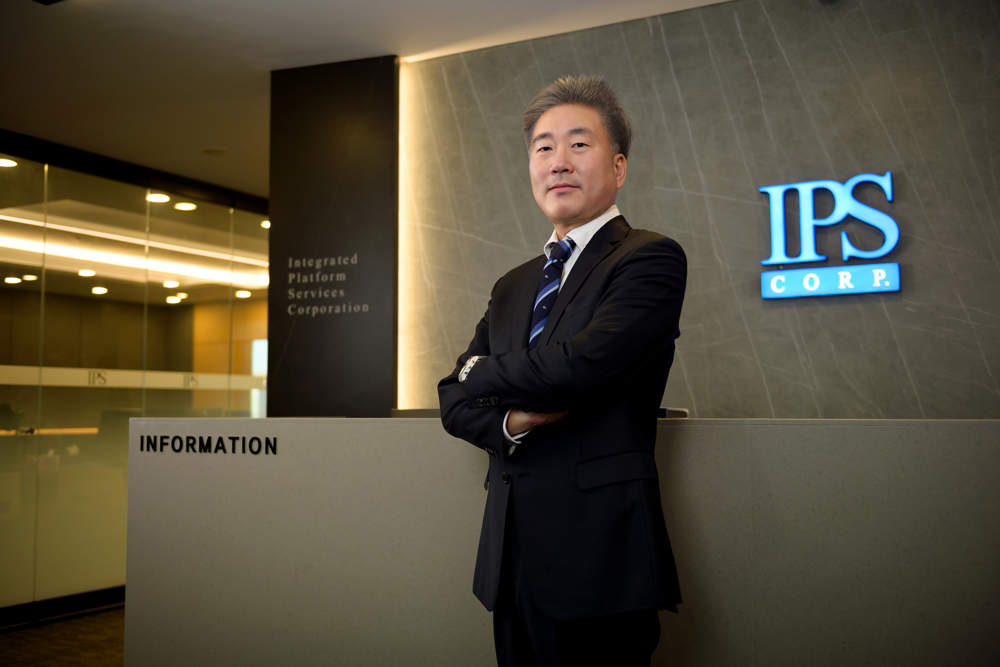
“At a time when Korea’s foreign exchange market is undergoing the most significant structural transformation since its inception, I am very pleased to share the news of the launch of IPS PRO. First and foremost, I would like to express my sincere gratitude to Edgewater Markets, our technology partner, a global leader in FX platform development and operations. It is a great privilege for us to collaborate with Edgewater on IPS PRO. By combining Edgewater’s proven expertise with IPS’s deep market knowledge, we have built more than just a trading platform—we have created a strategic bridge connecting Korea’s capital markets with the global financial system.”
JooYeob Han, CEO, IPS Corp
Edgewater has a long history in supporting local markets. How does that shape your approach here?
Edgewater has a strong history of local market participation, particularly in the Latam region. We believe that deep local market knowledge and global connectivity are complementary, not mutually exclusive. We have consistently partnered with local market participants and partners to develop technology solutions that accelerate local market evolution, and it is fantastic to be partnering with IPS to do the same in Korea.
That ethos informs how we approach Korea. It’s not about transplanting a generic solution; it’s about understanding local market mechanics, regulatory nuance, credit behaviour, and workflow expectations, then designing technology that honours those specifics while offering global scale. This respect for local context has helped us earn trust in markets that historically had tight FX controls or limited foreign access. With Korea’s ongoing liberalisation, we see a tremendous opportunity to contribute meaningfully — helping global clients engage while supporting local ecosystem growth.
Ultimately, our approach and track record isn’t just a narrative — it’s a blueprint for local market technology solutions that benefit all participants.
What do you see as the biggest differentiator that the Edgewater technology platform provides to IPS?
One of the most important and unique features we have developed is our switch credit management capability. This feature supports flexible, dynamic credit paths between multiple CLOB participants, identifying the optimal credit route for matching orders. This holistic approach to individual credit relationships reduces the need for every participant to have bilateral credit relationships, whilst optimising the opportunities to access the IPS liquidity pools.
In mature markets like FX, genuinely innovative capabilities do not get to market very often. As an addition to the huge selection of capabilities and trading workflows supported by the Edgewater technology platform, we feel that that our dynamic switch credit model will be a game-changer for the IPS platform, and may set a new standard in how platforms handle credit.
A new chapter for Korea’s FX Market: The launch of IPS PRO
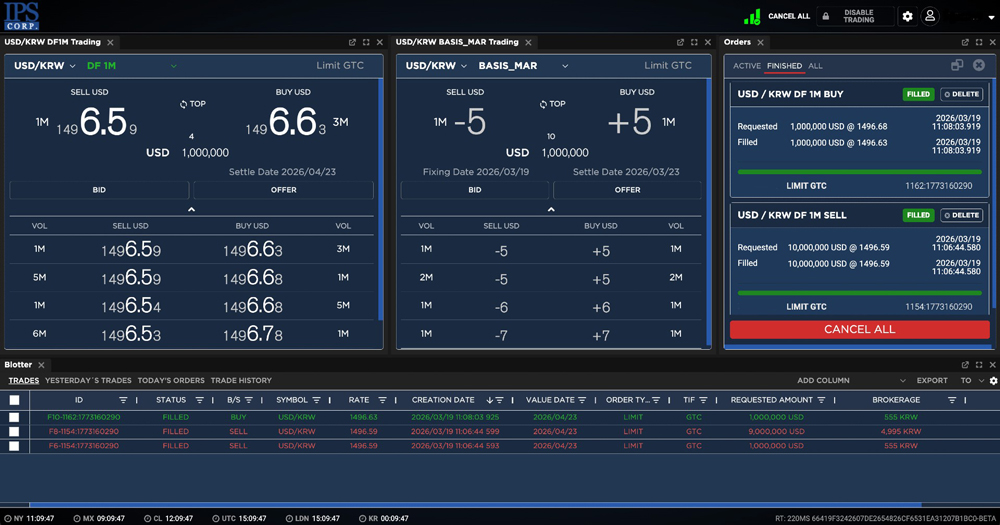
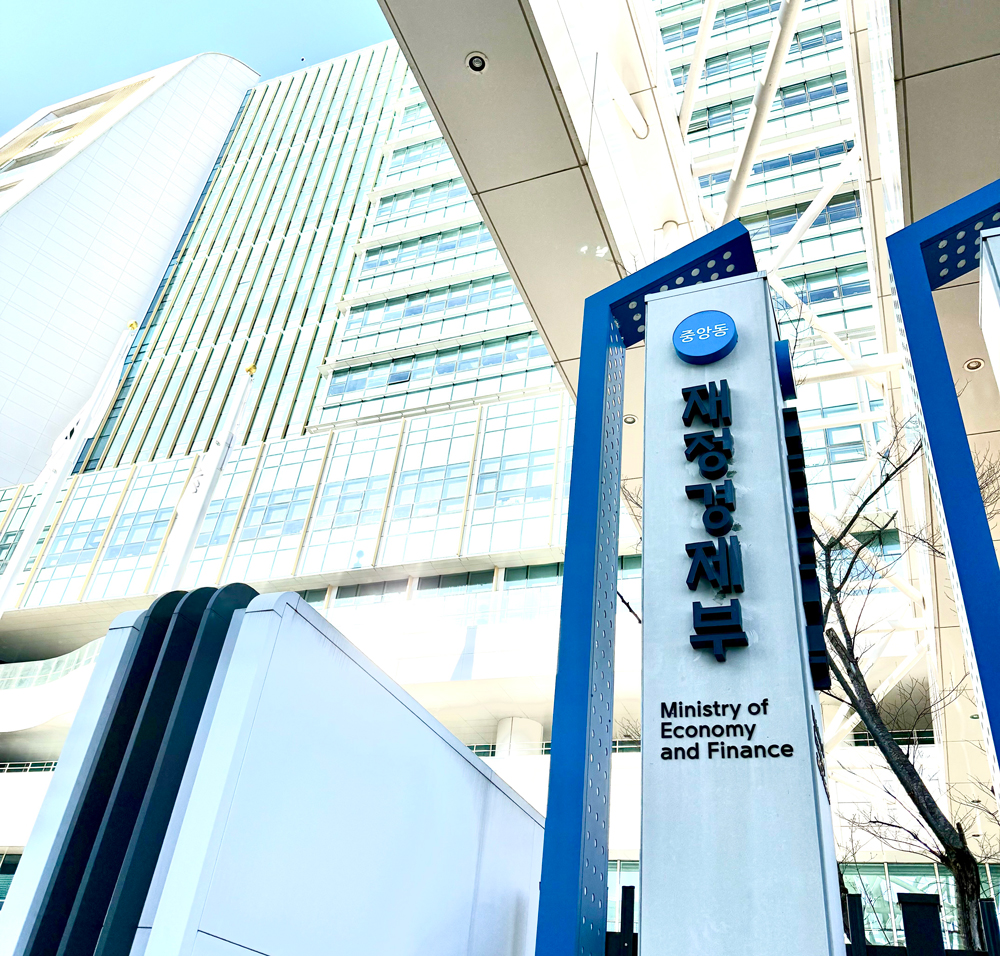
IPS PRO is the only onshore electronic trading platform authorized by the Ministry of Economy and Finance to facilitate both USD/KRW deliverable forwards (DF) and offshore non-deliverable forwards (NDF). The platform received regulatory approval in July 2024 and has undergone approximately two years of development.
The platform adopts a central limit order book (CLOB) model, enabling transparent price formation and allowing multiple banks to quote simultaneously.
Trading hours will run from 9:00 a.m., when the onshore market opens, until 2:00 a.m. the following day. In line with the authorities’ plan to introduce a 24-hour FX market from July, IPS PRO is expected to transition to round-the-clock operation.
The platform introduces a structure in which certain liquidity provider (LP) banks are designated as intermediary “switch banks,” helping to alleviate credit and liquidity fragmentation between onshore and offshore registered foreign institutions (RFIs). The aim is to enhance price competitiveness and improve access to the onshore market for overseas participants.
Tradable instruments will include 1-month DF and NDF, 1-month NDF MAR (Market Average Rate), and Basis MAR. With the launch of IPS PRO, NDF trading will become available during regular onshore trading hours. The newly introduced 1-month DF product is also expected to facilitate a shift from existing 1-month NDF trading to DF trading.
In particular, Basis MAR is a newly introduced mechanism designed to reduce operational risks associated with traditional MAR transactions. Under the current spot MAR structure, trades are booked after the market closes at 3:30 p.m. However, with Basis MAR, trades can be booked simultaneously at the time of execution.
By applying a real-time booking process—where transaction details are recorded in the system immediately upon execution—IPS expects to reduce compliance burdens for participating institutions and help mitigate NDF position rollover risks for RFIs.
Edgewater Markets and the road ahead


Matthew, Edgewater has been pioneering the local onshore markets in a variety of countries, first with Latin America, and now in Asia. What are the priorities going forward for this onshore/offshore business?
Edgewater has been building and scaling our technology with a focus on custom build solutions for each client, which often involves a variety of nuances to solve client work flows unique to the country and client. While we began in Latin American countries, namely Chile, Peru, Colombia, and Brazil, it was always on our radar to expand to the Asian NDF market, with our focus on Korea and India. Having gone live with a technology partnership with IPS Corporation in early March, we have entered the largest NDF market in the world, and will be expanding to India later this year. Both of these markets are very large, and are seeing very specific loosening of monetary restrictions which will help globalize their currency markets. Edgewater Markets is the perfect technology partner firm to help the local financial participants electronify their market share and scale their businesses for future growth.
South Korea’s regulatory environment is changing, quite rapidly in fact, how much of this has been a factor in entering the Korean market at this time?
When ministries of finance loosen up on the regulatory constraints, particularly in Non Deliverable Forward markets, it connects the onshore market to the offshore market. So the MOF of South Korea’s decision to move to a 24 hour market in July of 2026 is historical, and presents opportunities for the local onshore participants. Later in the year, in September 2026, there will be a pilot for offshore KRW settlement, and this will be yet another step forward for the local financial participants in South Korea to connect more broadly with the international markets offshore. Looking a bit further down the road, in 2027, the MOF of South Korea will be endorsing full offshore KRW settlement and STP (CTM/K-CTM). In short, Korea is eliminating the last structural barriers to MSCI DM inclusion. It has been a pleasure to work with IPS corporation to bring their technology and distribution to the forefront of these regulatory changes; we can’t wait to watch their business scale and succeed.
Skovran, there has been a dramatic increase in govt financial ministries around the world to have less restrictive currency controls, thereby opening up their countries to new investment and banking opportunities. Edgewater’s focus has been on custom building technology specific to each client, in each region. What do you see for Edgewater’s expansion in Asia, specifically with the Asian NDF market?
There is a natural progression for advancing economies to have a less restrictive currency. Technology has facilitated enormous integration of regional and global economies. The loosening of restrictions put in place decades ago will allow local onshore financial participants to internalize, and thus internationalize their franchises. In Korea specifically, the use of Non Deliverable Forwards for hedging purposes have grown tremendously, in line with the success of the corporations in South Korea, and the entirety of their trade volume.
Korea moved to a free floating exchange rate system in December of 1997, with offshore activity, the largest and most liquid in the world, taking place with the use of non-deliverable forward contracts.
Edgewater’s partnership with IPS Corporation is a part of that natural progression of combining technology with local franchise opportunities as the MOF of South Korea take the next step in liberalizing the onshore and offshore KRW market. As each country embarks on a similar journey, Edgewater will be there to support and custom build technology for clients to maximize their franchise and seize the opportunities.

Nate, Edgewater Markets has been expanding into regions of the world, new data centers, and a variety of new hires to support your growth, how does South Korea and your technology partnership with IPS Corp fit into your global footprint?
Edgewater Markets is present in several data centers globally; NY4, LD4, and SG1. We utilize our connectivity with PoP’s into TY3, Kio5 in Mexico, and through Amazon’s network in the cloud. Edgewater has a been a supporter of the SG1 data center since inception, and will run much of our technology connectivity to support our clients in the region from that data center.
There is of course cross over, and both LD4 and NY4 will also be involved in the KRW business line. Edgewater’s unique value proposition is that we’re connected to everyone, in each data center, and have matching engines and CLOB technology that operates in micro seconds.
Edgewater continues to expand its global footprint, including in Singapore and London, supported by its advanced technology infrastructure and client connectivity. In parallel, the firm is preparing to support evolving market developments, including extended Korean trading hours and the continued electronification of the onshore market, in line with the MOF’s initiative toward a 24-hour liquid onshore/offshore market structure. This reflects Edgewater’s broader strategy of delivering support, credit, and price distribution alongside custom-built technology, as it continues to expand its offering globally.