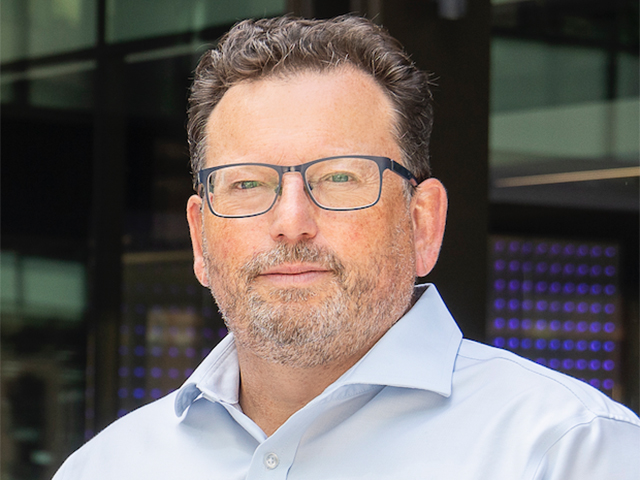
Keith, you’re fresh in your role at OSTTRA. What is the scope of your responsibilities and priority objectives?
I’m responsible for current and new OSTTRA FX services, across both bilateral and intermediated ecosystems, and will also support my colleagues who own a multitude of cross-asset services (such as risk mitigation/optimisation services and portfolio reconciliation) as they pertain to FX use cases.
My priority objectives include:
- Working with our clients on the industry go-live of our FX PvP service in H1 2027, starting with the largest currencies which don’t currently benefit from a scalable safe settlement service. We are fortunate to have had a significant number of global banks contributing to and endorsing our service design – it’s now our responsibility to work with banks, local market participants and overseers to ensure a successful launch, resulting in broad adoption over the coming years for currencies such as CNH, PLN, TRY, THB, CZK, AED, SAR.
- Doubling down on our FX Prime Broker ecosystem and developing the appropriate functionalities to ensure all client types across our workflows feel the platforms are being enhanced in line with their needs. OSTTRA is central to the FX PB market, and I want a deeper and more structured cadence of engagement with both the hedge fund community and the Prime Brokers. OSTTRA is privileged to be at the centre of these networks and I am committed to ensuring our services evolve in line with our clients’ requirements.
- Hiring additional talent – folks with a proven track record of delivering successful FX industry solutions. For example, Matthew Hill joined OSTTRA and my team at the beginning of August. He has extensive experience in FX with CLS, HSBC, TP ICAP and of course MarkitSERV (a founding business of OSTTRA). Across our tenures at MarkitSERV and CLS, Matt and I have worked together for over 10 years, and I’m delighted that we are doing so again. He’s going to bring his experience of building industry consensus to the evolution of OSTTRA’s FX suite.
Your previous leadership roles were at core infrastructures like CLS, SWIFT and MarkitSERV. How does that background shape your approach to FX safe settlement via PvP Orchestration?
Those experiences and taking time to listen to the deep domain experts amongst our client base, have taught me the importance of taking a pragmatic approach to service design. It’s critical to factor in current rails, local market conventions, ease of client contracting and technical adoption as well as having a precise understanding of the value proposition from the users’ perspective, including time-to-market and time-to-value. I think that’s the key to unlocking the benefits of safe settlement for a broader range of currencies.
For this service, clients can leverage existing connectivity, contract via existing master agreements and don’t need to pay a third party for sponsored access. The service is designed for the specific needs of the target currencies, accommodating the unique demands and operating hours of each currency market and it does not create liquidity pinch points: it applies an approved rulebook to existing bilateral flows, reducing settlement risk and providing limit relief without restricting local market liquidity.
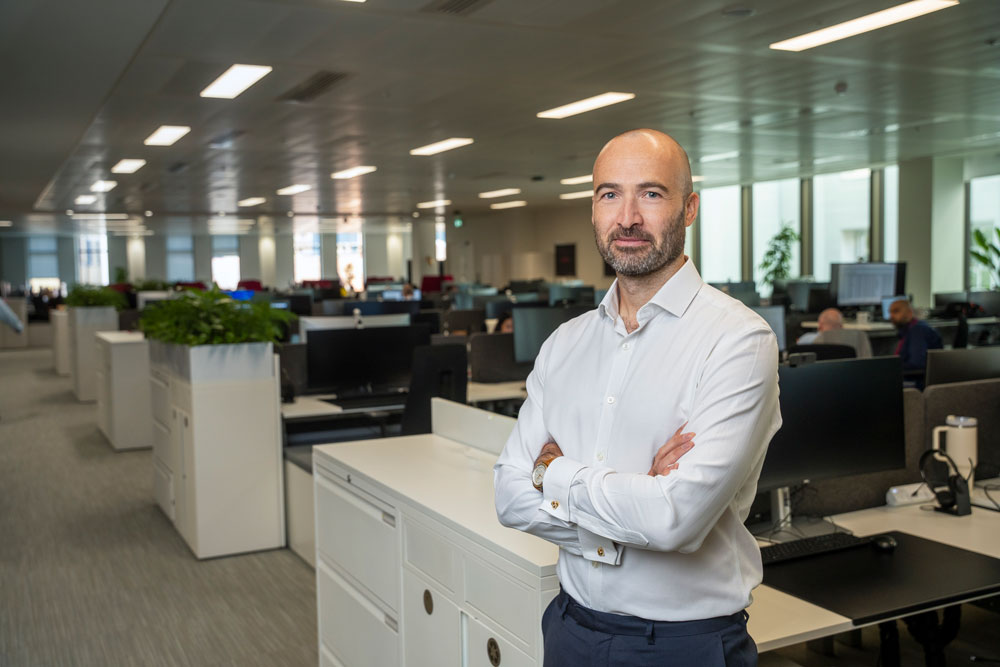
Matthew Hill is bringing his experience of building industry consensus to the evolution of OSTTRA’s FX suite.
Why has safe settlement become such an urgent priority for global FX market participants right now?
There is clear industry momentum for reducing settlement risk. We all know the headlines about an estimated $1.4 trillion in daily traded volume being exposed to settlement risk and multiple growth currencies not being supported by traditional settlement infrastructure. The FX Global Code acknowledges this risk and in Principle 35 it states: “Where practicable, market participants should eliminate settlement risk, for example by using settlement services that provide PvP settlement”.
The challenge with PvP services has historically been that they have not yet reached all parts of the FX market. Asian currencies such as the Chinese renminbi and the Thai baht, Eastern European currencies such as the Polish zloty and Czech koruna, Middle Eastern currencies such as the United Arab Emirates dirham and Saudi riyal as well as the Turkish lira, are most typically cited by major market participants as the most underserved by existing PvP solutions.
I have yet to meet a significant FX market participant who would not welcome the ability to safely settle these growing currencies if it comes at a sensible price point. Our clients want a service model that can flex to the specific requirements of each currency, thus ensuring a path to broad adoption and unlocking additional benefits, such as settlement risk limit relief which would enable increased trading of these currencies.
All of the aforementioned currencies are part of our roadmap.

You mentioned the importance of taking a practical or pragmatic approach: From an operational and technology perspective, how does your service make PvP adoption simpler?
One of our core design principles was to eliminate the heavy implementation burden traditionally associated with joining new market infrastructures. We achieved this by building on top of the rails and pipes that market participants already use every single day:
Direct Matching Ingestion: Trade data is ingested directly from the OSTTRA trade matching platforms that banks rely on today, including OSTTRA Connect for FX (formerly TradeSERV).
Existing Payment Rails: The service utilises a bank’s existing SWIFT messaging capabilities.
Commercial Settlement Agents: We utilise trusted commercial bank settlement agents to support payment orchestration, facilitating the time to market timeframes that our clients require.
Simplified Legal Framework: Participants access the service through direct membership and can leverage existing master legal frameworks. By eliminating the need for expensive third-party sponsored access models, we provide a clean, direct path to broad market adoption.
This central service, operated by OSTTRA, is really designed to complement existing PvP services, and to minimise technical and operational implementation.
How do you see OSTTRA’s FX PB services evolving?
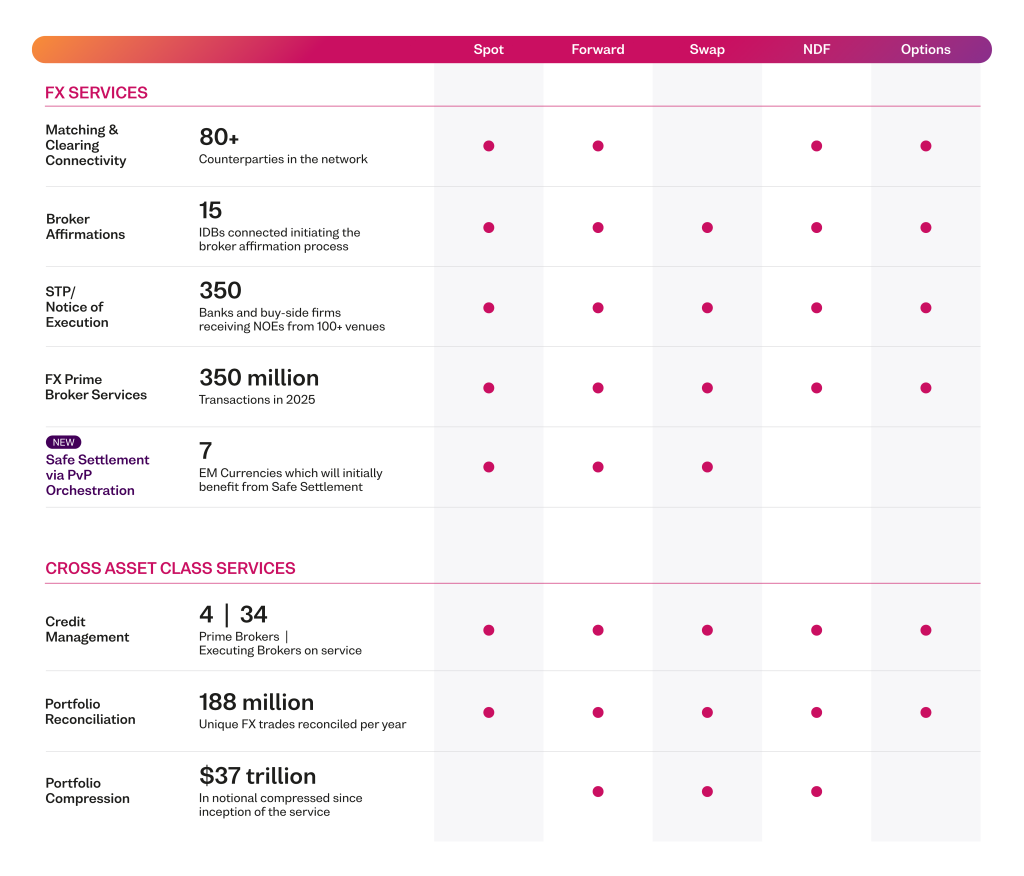
OSTTRA sits at the very centre of the FX Prime Brokerage market. In 2025 alone, our network processed over 350 million FX PB transactions. Given this central role, I am deeply committed to ensuring our service capabilities evolve in lockstep with the changing requirements of the Prime Brokers, their clients and the Executing Brokers they trade with. To drive this evolution, we are enhancing our market engagement model. In addition to refreshing our FX Prime Broker working groups, we are establishing a dedicated forum specifically for the Hedge Fund community. Buy-side market participants represent a vital component of the Prime Brokerage ecosystem, and their operational needs must directly inform our product roadmaps.

Can you talk to specific FX PB roadmap items?
Our roadmaps will be refreshed following the changes to market engagement but will include enhanced support for FX Options, upgraded operational dashboards for Hedge Funds and further development of OSTTRA’s credit management service.

Beyond matching and settlement, how is OSTTRA helping FX market participants optimise capital and margin across their portfolios?
Post-trade efficiency extends far beyond execution, matching and settlement. Under today’s stringent capital frameworks (such as SA-CCR) and uncleared margin rules (UMR), capital optimisation and margin mitigation are central to a bank’s profitability.
OSTTRA offers a comprehensive suite of cross-asset portfolio services that layer directly onto post-trade transaction flows:
- Portfolio Compression: OSTTRA has compressed over $37 trillion in notional since service inception, eliminating unnecessary gross exposures.
- Basis Risk Mitigation: Over the last 12 months, our basis risk optimisation platforms processed trillions of dollars of notional in both FX Options and NDFs, across 15 currency pairs for 30 global banks.
- Margin & Capital Reduction: OSTTRA’s optimisation services reduced billions of dollars in UMR Bilateral Initial Margin, significantly reducing capital requirements for our clients.
- Portfolio Reconciliation: triResolve reconciles over 188 million unique FX trades per year, ensuring portfolio integrity across global counterparties.
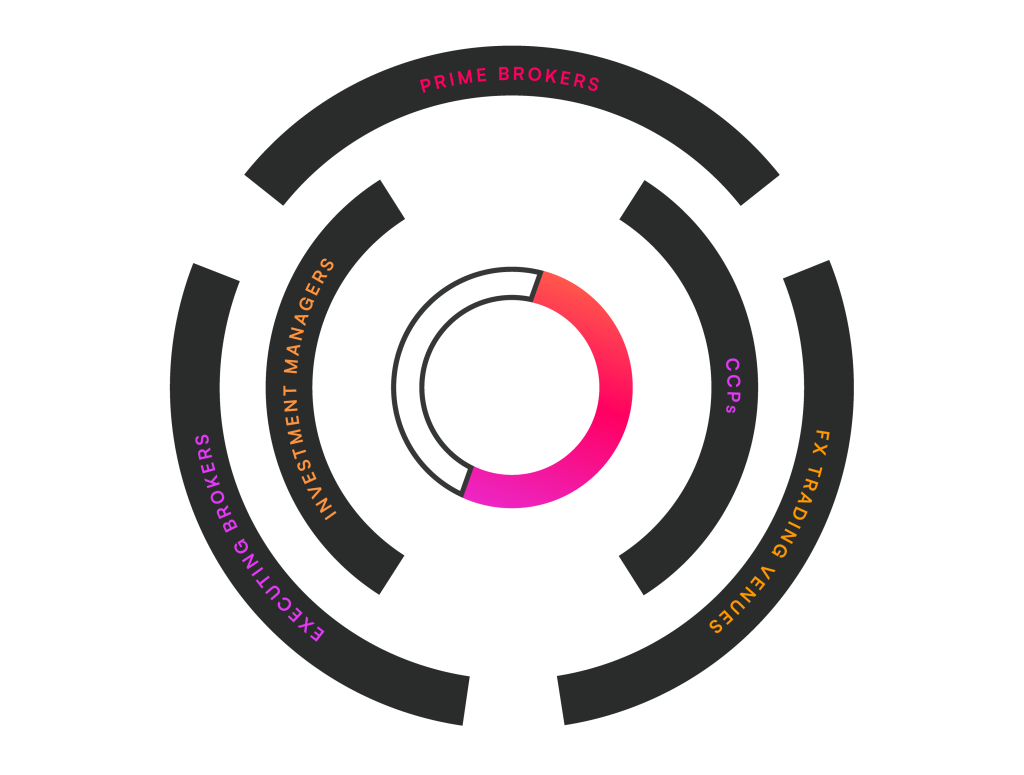
- This interconnected suite ensures that every trade passing through OSTTRA’s infrastructure can be optimised for capital, margin, and operational efficiency:

You were part of the management team that built MarkitSERV, a founding OSTTRA company. What’s it like coming back and how have things changed?
Returning to the business feels both familiar and incredibly exciting. OSTTRA has evolved significantly since its formation in 2021 through the combination of MarkitSERV, Traiana, TriOptima, and Reset. Following KKR’s acquisition of OSTTRA alongside strategic equity investments from a consortium of major global banks, the business has gained fresh momentum, scale, and financial backing.
What stands out most today is the sheer breadth of OSTTRA’s combined capabilities. In the earlier days at MarkitSERV, post-trade was largely focused on electronic confirmation, straight-through processing and supporting the G20 regulatory change agenda via clearing connectivity and regulatory reporting. Today, we layer in sophisticated cross-asset optimisation, compression, reconciliation and settlement services.
The scale of OSTTRA’s market connectivity is unmatched across global capital markets. Our network connects 29 G-SIB banks, over 550 banks in total, 1,400 investment managers, and 150 trading venues, processing upwards of 80 million trades every month, yet there are still additional and new parts of the post-trade value chain that our clients wish OSTTRA to service. It’s a fantastic point in time to reunite with exceptional colleagues across a diverse talent set and be part of the next chapter.