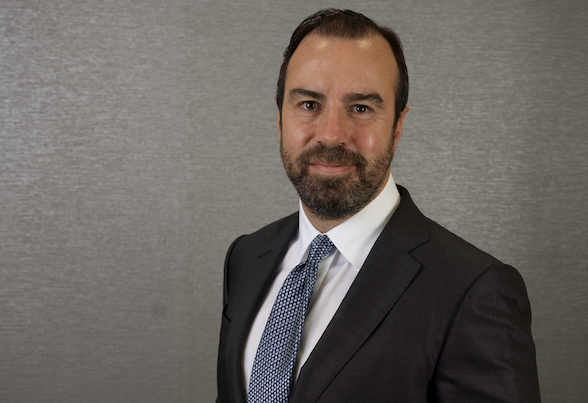
Equiti has emerged as one of the industry’s rising stars over the past couple of years, and has rapidly transitioned from a FX and CFD broker and liquidity provider to a world class multi-asset broker and online trading technology provider. With Iskandar Najjar, Equiti Group’s CEO at the helm, a strong focus on regulation, governance, collaboration and innovation has been instilled throughout the group to drive the underlying goal of providing unrivalled client experience. To achieve its goal the company has had to rapidly adapt, expand and innovate at every level and has ambitious plans to continue its aggressive global expansion. e-Forex spoke to Mr Iskandar Najjar about Equiti’s impressive growth and exciting developments in every area of the business during this unprecedented year and what lies ahead for the company in 2021.
Let’s get the elephant in the room dealt with first: how has 2020 been for Equiti, and what have been the lessons learned from coping with Covid?
IN: Even before Covid hit, at Equiti we started 2020 with the plan to make this our year of innovation and change. This meant we were fortunately already in a good place to not only manage this year’s disruptions, but flourish in them. From upping our investment in systems and people to building the governance structures for a platform that would support scalability and growth, we already had multiple programmes in place that meant we could both react quickly to the crisis and take advantage of the opportunities presented by Covid.
This has been borne out by our unprecedented growth this year, and internally our teams around the world have managed the transition to remote working smoothly and successfully. We’re particularly proud of making this transition while not only not compromising our high standards of client service, productivity and growth, but in fact taking them to a whole new level. We’ve added numerous new technology partners, including Your Bourse, Gold-i, Lucera, OneZero and FXCubic, and have this year alone grown our product offering by 350%, with more to rollout before year-end.
I think one lesson has been that while a lot of companies have been adjusting to Covid by finding new ways of doing business and new internal practices, we’re focusing on adding more flexibility to the way the FX and multi asset markets work for traders going forward, building towards what that future will look like.;
Strong relationships are just as important as ever. New sales might be tough at present, with less travel and fewer meetings, but this makes our strong and long-standing relationships across the industry, whether with supplier or clients, all the more important. In part, Equiti’s growth has been propelled by market demand for a more comprehensive suite of financial investments by both retail and institutional clients. In recent times we have seen companies like Equiti start to play an important role within a client’s investment portfolio. Both retail clients and institutional brokers want a much wider product offering that includes not only traditional asset classes but new financial instruments and new asset classes. Equiti is rapidly moving to expand its product offering and support services to provide a full ecosystem within the client investment portfolio – with a local touch.
A full and professional service to our clients applies to every aspect of the business, including payments. It is vital that we offer a seamless and secure payment experience.
Payment solutions are constantly evolving making moving money faster, simpler and more secure. Non-cash payments have increased in volume due to the rise in adoption of digital payment services across all market segments, especially during a global pandemic. Equiti is on top of the speed, sensitivity and security of payments so we’re able to offer the best to our clients. In terms of our global offering and corporate expansion we aim to understand the local payment methods in each region and whom owns the majority of market share to ensure we have a local offering which our clients know, use and trust.
We are pleased to now offer over 100 new payment solutions in Latin America, and well as additional new payment solutions in East Africa and South East Asia. Equiti has also added an extensive range of new and alternative payment methods including e-wallets, credit and debit cards, mobile money, an Equiti-branded pre-paid card, international bank transfers in 39 currencies and other online payments – and there’s much more to come in 2021.

Which direction can you see Equiti moving in 2021 and what will your focus be on?
IN: The list is long! We’re continuing our expansion of our product offering across multiple assets, with the goal of delivering the most comprehensive suite of investments products. We’re continuing our global expansion across various regions. We’re making serious investments in AI and machine learning to enrich our risk management and pricing tools, and we’re ceaselessly seeking efficiencies in our back end.
Our focus in 2021 will be on innovation that delivers unrivalled client experience – and to aim to make our client experience a market disruptor. We see innovation not only in terms of new localized product offerings but working with local partners, innovating to provide local systems, tools and financial instruments, service and support methods, and also adopting local channels of communication.
This sounds like you’ll need to significantly add to your headcount.
IN: Certainly – our HR team has been busy! This year alone we have onboarded about 100 new staff globally – in the process quadrupling our compliance teams, tripling our technology team and doubling our operations and support teams at multiple locations all around the world.
Can you talk a little more about your investment in AI?
IN: Sure – this is best represented by our investment in AlgoLabs, a fintech set up four years ago by academics Drs. David and Sian Lindsay. AlgoLabs is Equiti’s research and development arm. We’re working with AlgoLabs on developing a proprietary risk management solution codenamed ‘Cerebro’. This platform will harness machine learning to build intelligent data-driven models and analytics solutions. The goal is to bring the best practices developed in investment banks and wholesale financial market institutions and make them available to ou retail clients. The plan is to licence this software to our institutional and B2B clients. Not only does AlgoLabs have a very healthy publication record, but the company is also proud to sponsor three Computer Science PhD students at Royal Holloway University of London.
One thing that sets Equiti apart is its global reach – that’s the kind of thing that’s easier said than done. What insights can you share?
IN: Being regulated in the markets we operate in is central to Equiti’s strategy going forward. Our clients want the peace of mind it can bring, and it means we can offer our broker and retail clients products customised to their local circumstances.
Our approach is to work within the local regulator’s guidelines and innovate within the guidelines they have defined. We already have six licences by various market regulators including the FCA in the UK, CMA in Kenya, JSC in Jordan, the SCA in UAE, the FSA in the Seychelles, plus CBA in Armenia, and we are set to add to this list in 2021.

Mohammad Isbeer, Global Head of Brokerage Sales at Equiti tells us a little about the firm’s institutional business and its focus next year.It’s been a tumultuous year for us all: how have the dramatic events of 2020 played out on your desk?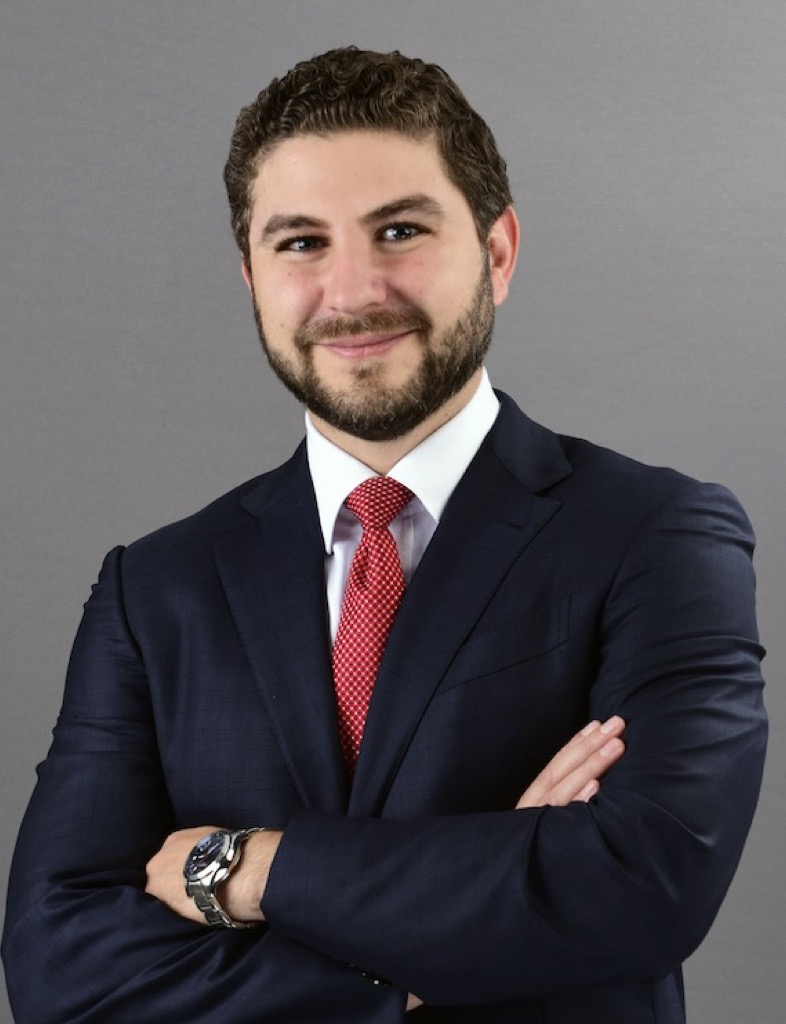 Mohammad IsbeerThe pandemic has certainly brought its challenges, but the brokerage and prime-of-prime space have also felt extremely special this year. This business is built on strong relationships and continuous face-to-face client communications – which have obviously been particularly limited this year. However, as we moved as a team through the crisis it soon became apparent that all the effort that Equiti has put in over the last few years has more than paid off. Our systems have proved even more robust than we could have hoped, and our contingency planning proved more than sufficient – we have in fact thrived this year. Anyone following the FX markets can’t have missed the extraordinary volatility and trading volumes earlier in the year. Behind the headlines, however, there was a lot of hard work, from the dynamic adjustment of risk books to the fluid adaptation to brokers’ needs in terms of liquidity, credit lines and trading limits. As with most things, the preparation we had done in advance was key: we had the right infrastructure and capital in place already, meaning we could serve our clients well, maximise profits, and fully optimise for the extreme volatility in this most unusual of years. As we begin to think about a post-pandemic world, do you have a view on what big challenges await in the institutional space? Mohammad IsbeerThe pandemic has certainly brought its challenges, but the brokerage and prime-of-prime space have also felt extremely special this year. This business is built on strong relationships and continuous face-to-face client communications – which have obviously been particularly limited this year. However, as we moved as a team through the crisis it soon became apparent that all the effort that Equiti has put in over the last few years has more than paid off. Our systems have proved even more robust than we could have hoped, and our contingency planning proved more than sufficient – we have in fact thrived this year. Anyone following the FX markets can’t have missed the extraordinary volatility and trading volumes earlier in the year. Behind the headlines, however, there was a lot of hard work, from the dynamic adjustment of risk books to the fluid adaptation to brokers’ needs in terms of liquidity, credit lines and trading limits. As with most things, the preparation we had done in advance was key: we had the right infrastructure and capital in place already, meaning we could serve our clients well, maximise profits, and fully optimise for the extreme volatility in this most unusual of years. As we begin to think about a post-pandemic world, do you have a view on what big challenges await in the institutional space? Despite all the Covid drama, Brexit has never gone away as a live issue. There is still great uncertainty about what the relationship will look like going forward, with UK-based brokers largely hedging their bets by moving into EU-regulated countries – mostly Cyprus – to make sure they don’t lose out on EU business. Equiti is also in the process of acquiring an EU license that should be finalised in early 2021. Meanwhile, what happened this year regarding liquidity in the OTC market for gold was a real eye-opener and shone a spotlight on how important it is to select the right liquidity providers and have backups in place in extreme market situations. Where is your focus with regard to products and services, going forward? We have broken down our client base into three key verticals and we are endlessly tweaking the offer to each to make sure they are fully serviced. We offer retail brokers bespoke liquidity via FIX API from either PXM or OneZero. They can either hedge manually or back-to-back via API, and if they prefer to use several vendors, we offer flexible connectivity. The goal is to offer them service on their terms, not ours, and to make sure our service is customisable. Along the same principles, hedge funds and corporate accounts receive multiple levels of liquidity tailored to their needs and consolidated into one prime broker relationship. We deliver full risk management assistance – on any scale – and support full proprietary trading. Our white label partners receive similar quality and flexibility of service, and our API integration and agile model mean they can go to market fast. We offer full front and back end support for marketing, CRM and UX development, and our global reach means we can offer local support. |
|---|

Benedict Sears, Head of Equiti’s FX Desk in London gave us his thoughts about how Equiti is positioning itself to capture new opportunities.How do you see the FX market evolving – and where do you see Equiti’s place in this new landscape? Benedict SearsAs a desk we provide FX liquidity to Asset Managers, Family Offices, Hedge Funds, Regional Banks and Sovereigns, unlike the other desks at Equiti we do not engage with any clients wanting to use margin, they must either use us as a Prime Broker or else have an ISDA directly with one of our Prime Brokers. Benedict SearsAs a desk we provide FX liquidity to Asset Managers, Family Offices, Hedge Funds, Regional Banks and Sovereigns, unlike the other desks at Equiti we do not engage with any clients wanting to use margin, they must either use us as a Prime Broker or else have an ISDA directly with one of our Prime Brokers. The clients we trade with are engaging in the FX market for a multitude of reasons, banks hedging corporate flow, equities and fixed income funds who hedge their FX exposure, and of course those taking proprietary FX risk. Historically, we have been limited to the trading of Spot FX, which only makes up a small subset of FX traded by our clients. So, this year we switched our focus to the roll out of an FX derivative offering which will include NDFs, forwards, swaps, vanilla and exotic options, facilitated by the addition of a second Prime Broker. This has led to us now seeing more interest from clients wanting to trade options over any other FX Product. Another core part of the expansion of our FX Desk has been in increasing our voice execution offering. Over the last few months we have been delighted to welcome two industry veterans to the desk, Stephane Treny and Stuart Cole, who have a combined 60 years of experience in FX with the Bank of England, Credit Suisse, Deutsche Bank, UBS, Royal Bank of Scotland, Mizuho and Unicredit. Clients come to us looking for the unique macroeconomic insights offered by our team, coupled with the kind of service that banks used to provide to clients of all sizes, but that is now limited to only their biggest Tier 1 clients following reductions in headcount across most Bank voice desks. In particular, we find clients are looking for help in executing large orders, with an emphasis on reducing market impact, coupled with market access which would be unfeasible to maintain for a Buyside firm in the fragmented OTC FX market. As a desk we work hand in hand with local market makers trying to match off the interest they have with those of our clients, resulting in unique axes and pricing. We have also been working on building out the CLOB (Central Limit Order Book) we run, this allows those clients with passive interest to get into the market quicker than they otherwise would, and for those aggressing to pay a significantly smaller spread. We also rely heavily on Buyside market makers across Spot, Options, etc, who have limited distribution capabilities and find their pricing to be extremely well received by clients. What insights can you share at this year end? Over the course of 2020 we have seen a recurring theme of spreads in the Options market proving to be too costly to cross especially for emerging market (EM) pairs such as USDTRY. We have also seen issues closer to home, more recently with the cost of hedging downside Cable in the options market being the most expensive it has been for months. Finally, we believe that the Covid vaccines that are appearing, though a cause for great relief regarding the potential lives saved and panacea to economic activity, could present an on-going headache for monetary and fiscal policy makers. With the rapid increase in the savings ratio seen on the back of the pandemic, and a vaccine now in sight, the key question is how consumers will balance confidence in future job retention against the desire to release this pent up demand: experience of recent recessions points to a rapid increase in spending. With a return of the savings ratio to around the 6% level, the huge increase in spending this represents on an economy that is smaller and less able to respond to any substantial pick-up in consumption makes a rise in the price level seem all but inevitable.The BOE therefore faces a potential policy conundrum: the need for tighter monetary policy to combat a potential rise in inflation, versus the need to keep policy loose in order to support both the economy and the jobs market, and to prevent the cost of servicing the Government’s huge debt stock from rising to unsustainable levels |
|---|