
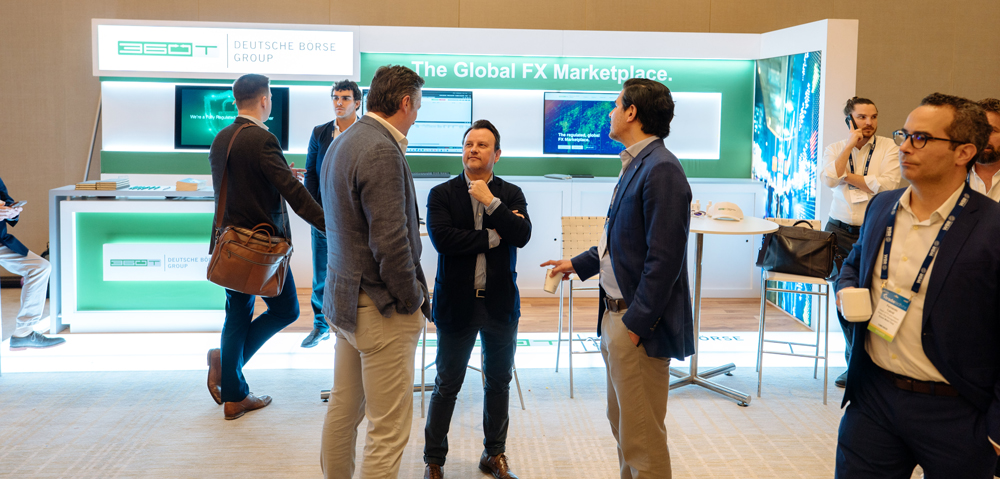
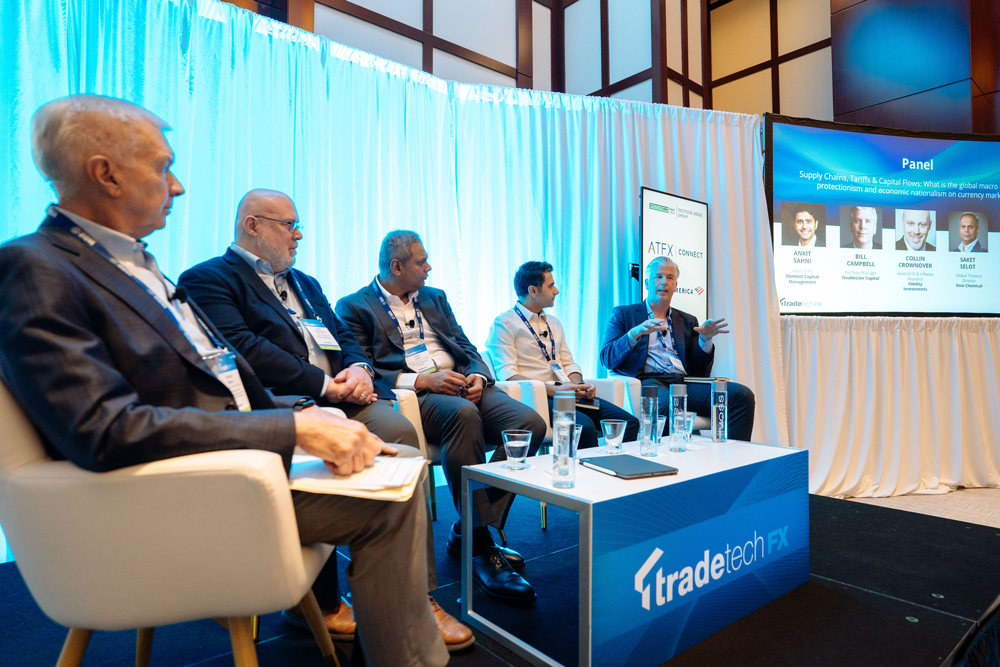
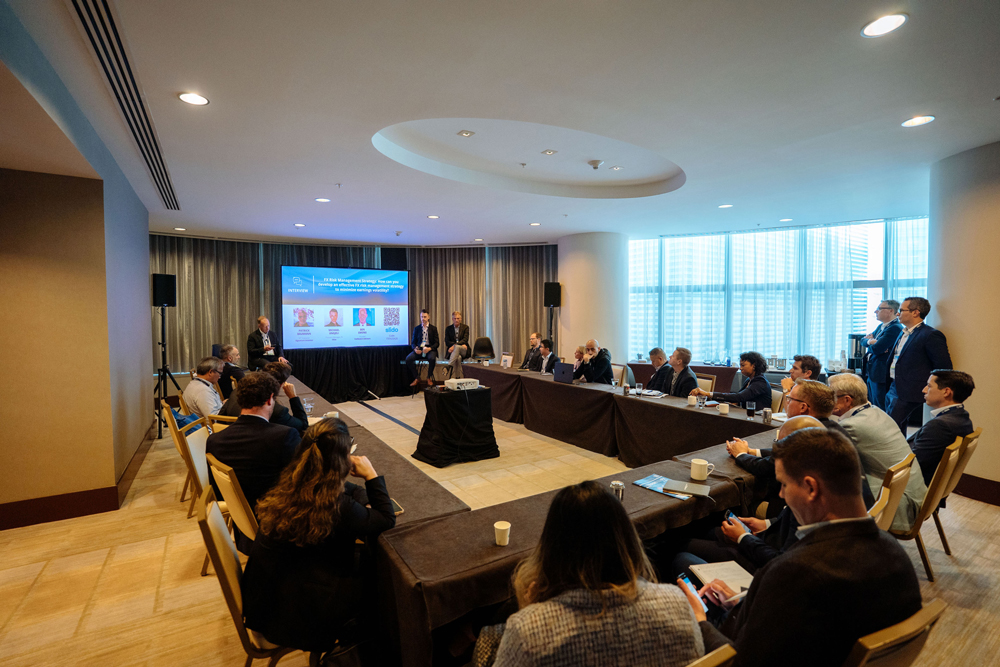
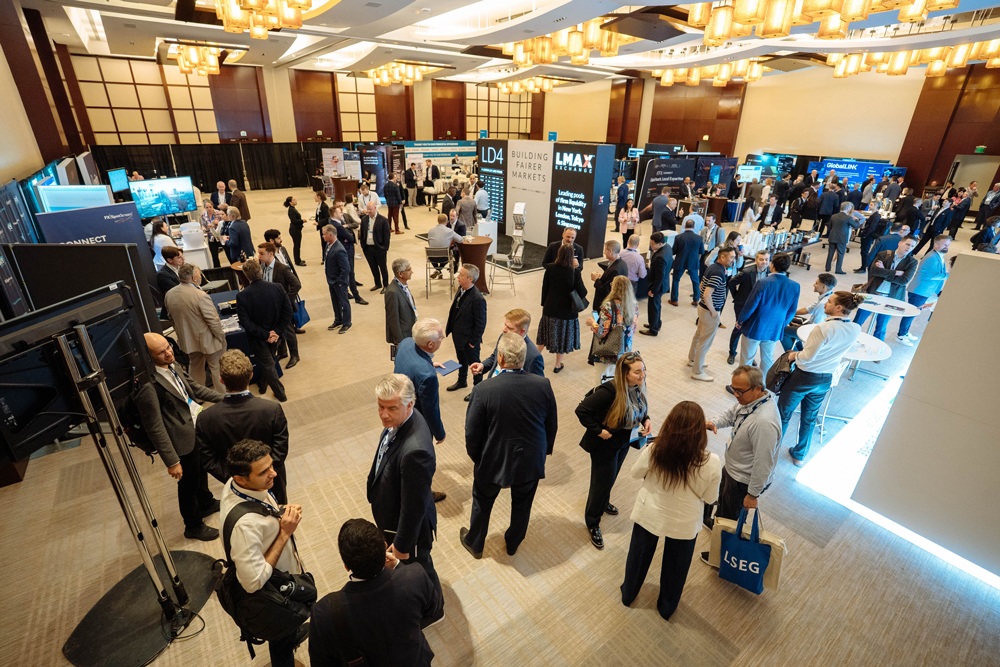
360T once again served as a major sponsor of TradeTech FX USA in Miami last month. As always, the event delivered a wealth of perspectives across panels, interviews and private discussions. Given the breadth of content, the team at 360T distilled some of the key themes that resonated most strongly with them. Below are their top five:
1. Technology delivery is outpacing adoption
2. AI, everywhere all at once
3. Will calls for an FX Forwards and Swaps reference rate grow louder?
4. Treasurers can deliver a value-add with FX execution
5. The humans aren’t done yet
1. Technology delivery is outpacing adoption
“The tools exist to enable seamless, end-to-end workflow automation — so why aren’t more buy-side firms using them?” one panellist asked during TradeTech, articulating a theme that surfaced repeatedly over the two-and-a-half-day event.
Across panels, roundtables and workshops, it was clear that innovation in buy-side FX trading continues to accelerate — yet adoption is lagging.
Automation illustrates this gap. Each year, buy-side firms identify increased automation as a strategic priority, a view reinforced by industry surveys and our own conversations with clients. However, there remains a significant difference between firms aspiring to achieve full no-touch FX execution and those that have successfully implemented it.
The barriers are familiar: legacy infrastructure that cannot easily support automation, perceived implementation cost and operational lift, limited access to high-quality non-spot data for robust tolerance checks, or simply the absence of a clearly defined roadmap and business case.
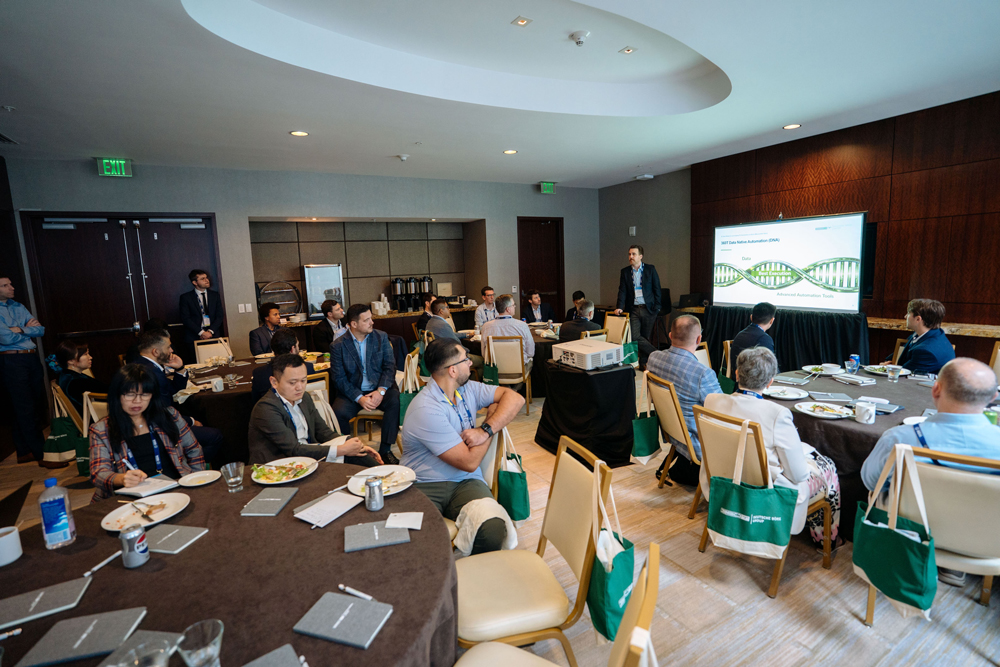
To address these challenges, 360T hosted a lunch workshop on Buy-Side Innovation Day focused on the practical realities of implementation. The session demonstrated that the technology and data required to deliver high-accuracy, no-touch FX execution — fully aligned with best execution mandates — are already available. A senior representative from a large buy-side firm shared their own experience, highlighting that the project was neither complex nor resource-intensive.
Importantly, case studies showed how firms are already leveraging the data-native automation (DNA) tools within 360T’s EMS to automate selected FX flows and achieve measurable cost and time savings. Those that hesitate risk ceding ground to more progressive peers.
Automation was just one example. Discussions also highlighted artificial intelligence, atomic settlement, tokenisation, streaming swaps pricing and independent execution algorithms — all technologies ready for broader adoption.
As one senior buy-side executive remarked in conversation with Matt O’Hara, CEO of 360T Americas: “Too many on the buy-side wait for trading and market structure to change.”
The firms that move first are the ones shaping that change.

2. AI, everywhere all at once
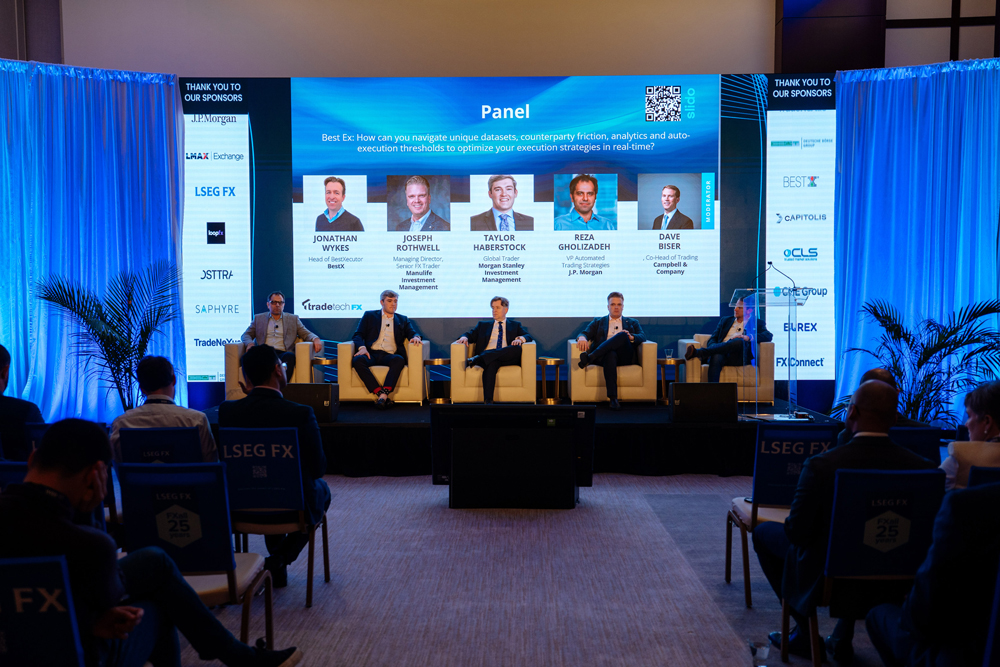
Carrying on where last year’s conference left off, AI was an inevitable talking point on just about every session at TradeTech.
For example, one asset manager revealed that they are using large language models (LLM) to take all the insights and market colour which they receive from various sources and then consume this information and disseminate it to internal stakeholders in the most efficient way possible. They added that they are also using AI to scrape their chat conversations with counterparties and turn the information contained within them into structured data which can be used to help them trade more intelligently in the future and enhance its transaction cost analysis (TCA) capabilities.
On another panel one sell-side representative said that they increasingly see some market makers leveraging deep learning to drive their trading, despite also noting that it is incredibly expensive to operate this technology and it requires extensive expertise to be effective. The speaker warned that this change could have market structure implications if it causes liquidity and pricing to consolidate into a smaller number of market makers.
Not to be left out, when a panel of corporate treasurers was asked about their top strategic priorities for 2026 they all indicated that they are AI related projects. One said that they’re looking at using this technology to evaluate potential embedded derivatives and commercial contracts, another said that it could be very helpful for helping to forecast financial exposures, and yet another suggested that AI can have an important role in conducting data analytics to inform future FX trading decisions.
It was clear that the FX industry is still only scratching the surface when it comes to the potential applications of this technology, although this isn’t necessarily bad news for the humans who are still (for now) running things.
As one large asset manager explained when outlining his firm’s usage of AI: “What AI is doing is moving humans up the value chain, that’s how we look at it”.
3. Will calls for an FX Forwards and Swaps reference rate grow louder?
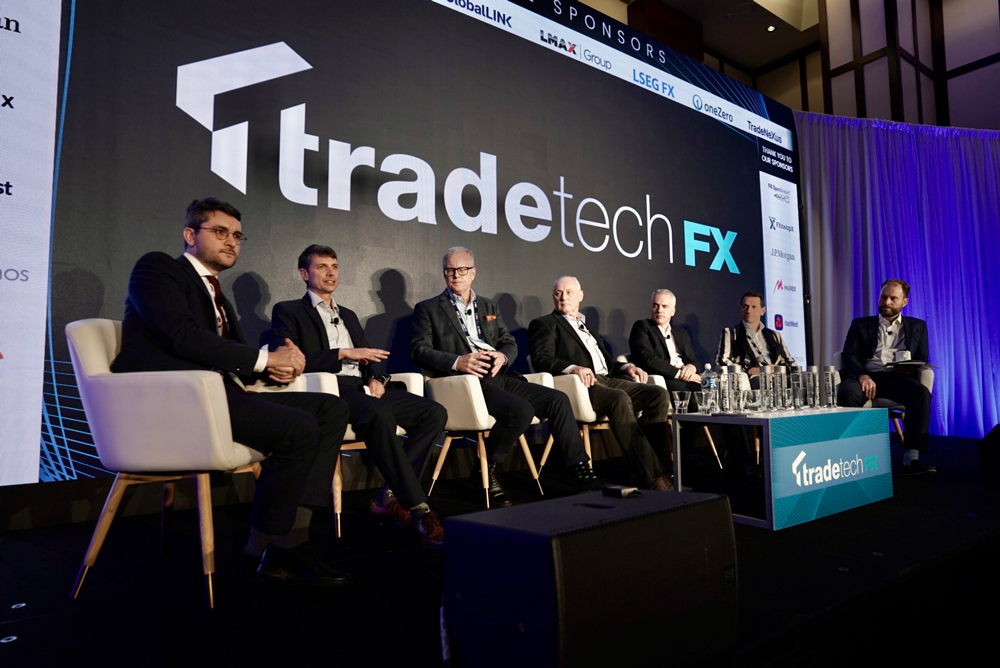
“How can we achieve an efficient pricing discovery mechanism in the Forward market and the Swaps market?” asked the head of FX at one large asset manager during one of the panel sessions.
They said that while liquidity and pricing is typically very abundant in these markets, access to transparent, executable pricing on a real-time basis remains a challenge. The speaker added that it would be very helpful to their organization, and other similar buy-side firms, to have a reference rate in the market.
Another person on the same panel noted that although streaming pricing for these instruments is available today the adoption of it remains minimal (see the first point of this article), and without this it is hard to build an accurate reference.
This is a topic worth keeping an eye on, because the need for a recognized reference rate for FX Forwards and Swaps was subtly mentioned by a couple of other senior buy-side representatives during TradeTech FX, and was also touched upon during the Federal Reserve Bank of New York’s 2025 FX Market Structure Conference in December of last year. During a panel discussion at that event, of which the recording is publicly available here one buyside representative highlighted the challenges associated with accessing FX Forwards and Swaps data, noting that while it is available on a post-trade basis for transaction cost validation purposes, getting it at the point of execution is much harder. “How we try and validate that at the time of trading, because we also try to achieve fair pricing, achieve best pricing, you can call up multiple brokers to enquire about the forward points, to get the best forward points for the size you’re trading but you also need to be mindful of information leakage so that is not the best way to trade,” they said on a panel titled ”Structural Dynamics in FX Swaps and Other Derivatives Markets”.
The speaker did note, however, that 360T offers a real-time Forward curve. This is done via our Swaps Data Feed (SDF), which offers full granularity across the curve from O/N out to up to ten years for G10 and up to five years for some local markets; providing Streaming Swaps Market Data in 400 crosses in G10, local markets and NDF currency pairs.
The SDF is unique as it is directly integrated with the pricing engines of 20+ top FX banks, receiving price feeds devoid of credit considerations or client specific spreads, which are then aggregated to provide an accurate view of where the market is.
4. Treasurers can deliver a value-add with FX execution
Over the past couple of years, TradeTech has been steadily growing the presence of corporate treasurers at the Miami event to offer a different buy-side perspective on the FX market.
And even amongst the treasury representatives at the conference, there was a wide range of different technology setups being deployed to manage and trade FX. For instance, one speaker noted that their organization created a separate treasury entity that operates as an in-house bank for all of the company’s business units. This setup enables them to continuously aggregate cash flows from these different units to the treasury entity as exposures arise and net out the FX exposures they need to subsequently execute externally in the market.
On the same panel, another treasurer explained that although their team is not alpha generating, it operates more like a sell-side trading desk as it manages risks that stem from customer flows in real-time. They added that, as a consequence, their top priority is to execute trade as quickly and efficiently as possible. A third speaker on the panel outlined that their firm conducts a lot of balance sheet hedging, trading G10 FX Forwards and Spot instruments to accomplish this. However, they highlighted that the firm also uses FX Options to hedge other elements of the business, and this requires a different approach and skill set due to the complexity and liquidity profile of that marketplace.
What do all of these different treasury approaches have in common? Well, yes, they all currently use 360T to facilitate their FX trading. But also, they crucially all viewed FX execution as a value-add which they can deliver to their organizations.
This was actually made explicit in a one-on-one interview with a very large multinational corporation and 360T client who talked about the growing importance of third-party data analytics so that they measure the impact of their FX trading and quantifiably demonstrate to internal stakeholders how they have saved the overall business money by optimizing execution. “When we think about corporate treasury and FX execution there’s two parts to it. Risk management is one, execution is the other and execution is sometimes overlooked a bit in corporate treasuries, especially the benchmarking part of it,” they said.
They added that, using benchmarks, the treasury team showcases FX trading performance — calculated as dollars saved per full-time employee on the desk — to senior figures at their organizations to demonstrate the value add that each member of the team is bringing to the FX component of their role.


5. The humans aren’t done yet
Much of the talk at TradeTech FX centred around new technology, with algos, AI and automation amongst the most common topics of discussion. Yet despite this, the speakers at the event gave the humans in the FX industry plenty to be cheerful about.
As noted in the second takeaway on this list, AI appears to be mainly viewed as an additional tool which can be used to unlock greater value and productivity from the humans already driving the FX marketplace.
One panellist also highlighted the need for humans to implement and maintain controls over AI in order to maintain market integrity. They praised the positive impact of the FX Global Code of Conduct on the overall industry and warned that deep learning technology, without the right human controls in place, could start to learn bad practices. Therefore, they stressed, the AI techniques used for price formation should not be applied to the actual trading and execution piece.
Another relevant anecdote came up in the buy-side interview at the 360T automation workshop. Asked about the key drivers towards greater automation within their firm, the speaker opted to first talk about an experience they had had with the 360T customer support team a couple of weeks previously.
They recounted how they had reached out to the support desk for assistance on a particular topic at 4.30pm on a Friday afternoon and were pleasantly surprised to have a human based in their local market answer and spend the next 45mins helping them, maintaining clear and constant communication throughout this time. “So I know we’re going to be talking about automation and technology during this session,” they said, “But I just wanted to remind people that behind all this, to make it work effectively, you still need people and human support.”
The value of human connections was also evident in the annual evening event that 360T hosted this year alongside our partners Eurex, Deutsche Börse Market Data + Services, BNP Paribas, Deutsche Bank, HSBC, UBS and Wells Fargo. It was our biggest one yet at TradeTech FX USA, with over 500 people in attendance. The humans aren’t done yet, not by a long shot!